
Marshmallow Time
Er, "marshmallow" coconuts, I mean. Tasty Thursday, edition 23

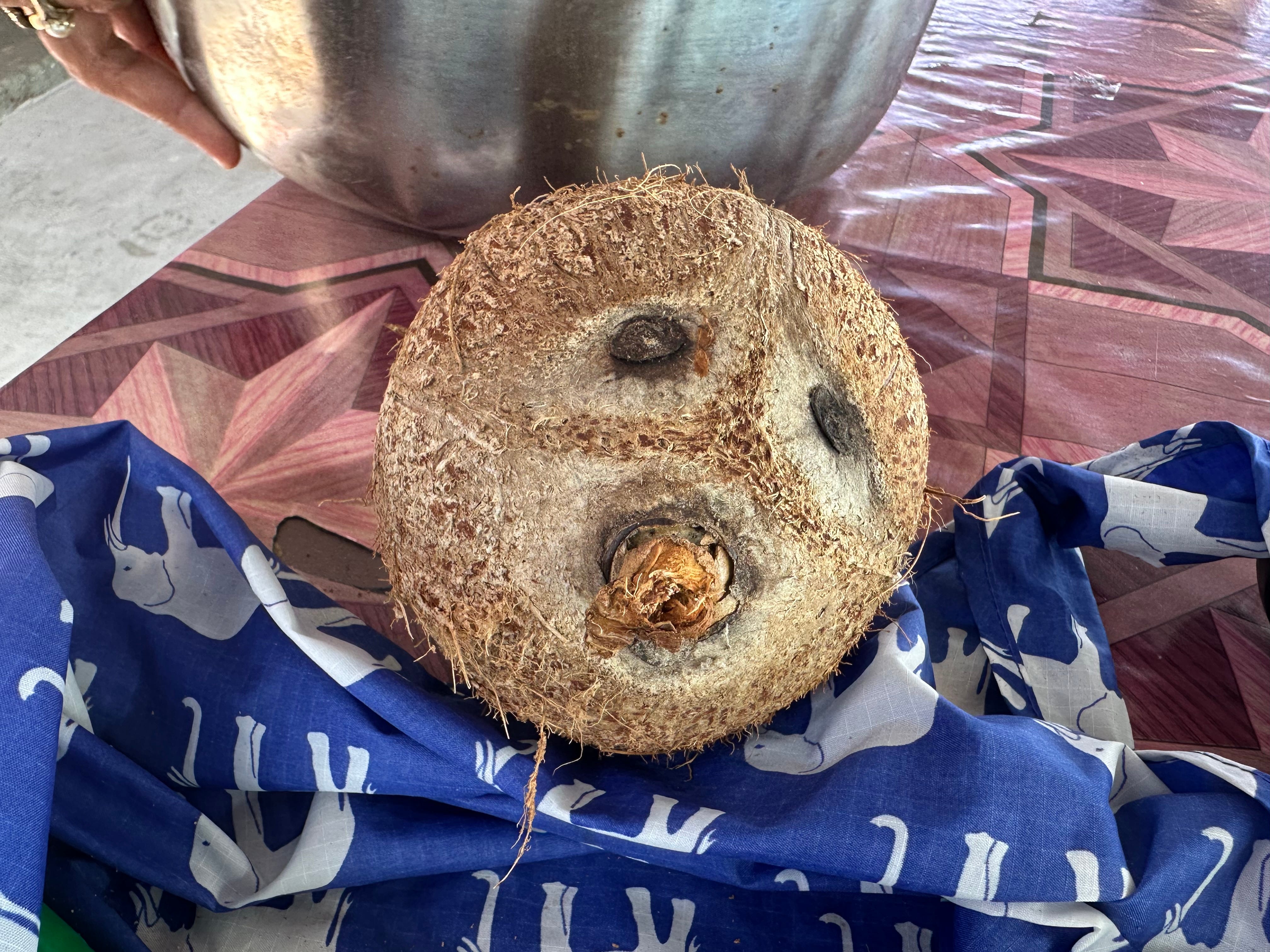
YOU SEE: a face? That’s not your galley, Nica. Are you lost?
I SEE: A cooking lesson from Kura
***
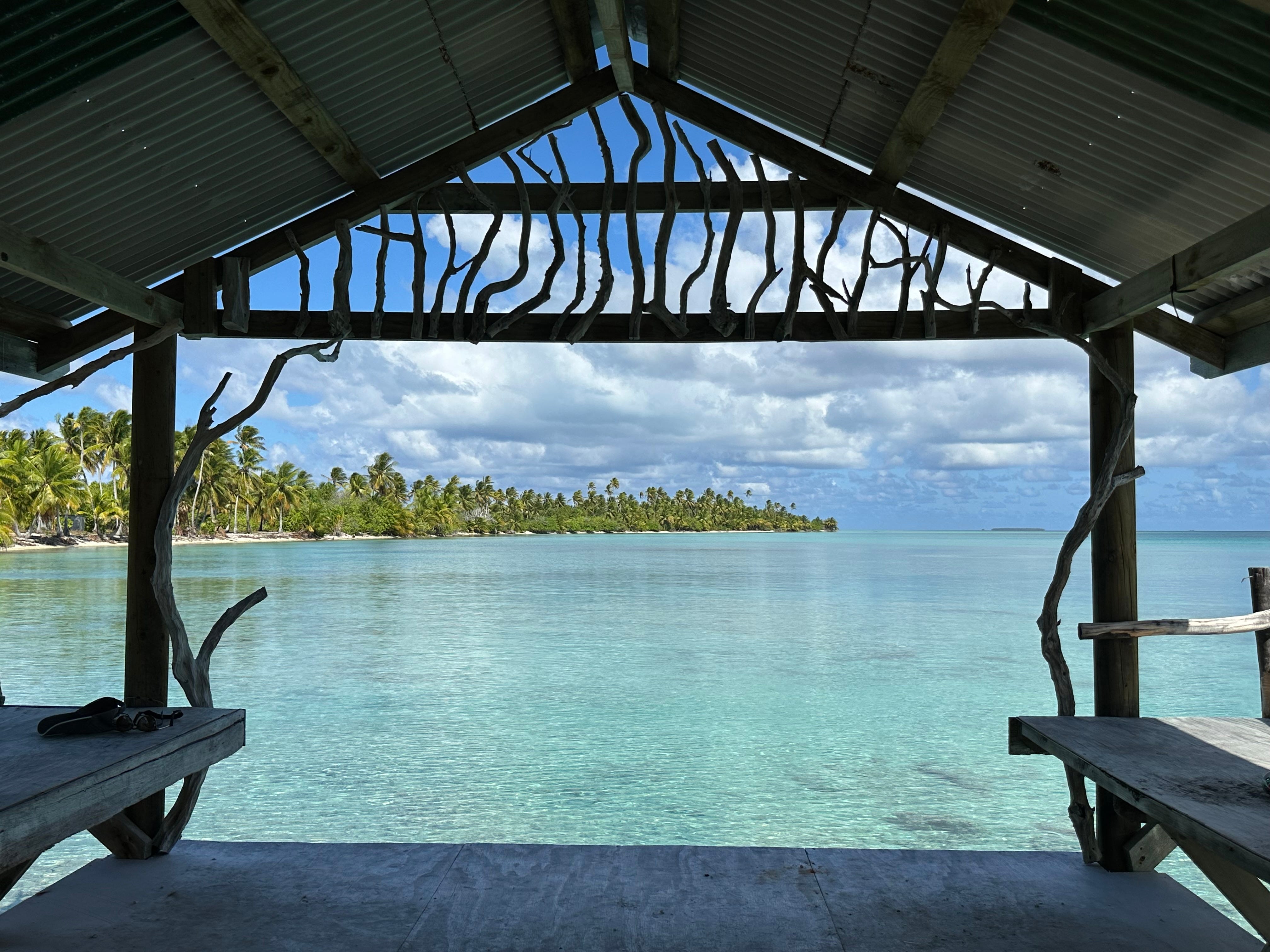
We’re still in Tongareva (aka Penrhyn, but the locals prefer Tongareva; Penrhyn is the name of some ship that went aground on the reef a couple of hundred years ago and has nothing to do with the Polynesians who already were living here). There are two villages in this tiny atoll with about 130 total inhabitants. The main village, Omoka, is a port of entry for the Cook Islands and is situated near the pass. Sadly, the anchorage is completely exposed to the eastern tradewinds (plus is deep and absolutely mined with coral heads), so we have chosen to spend almost all of our time on the eastern side of the lagoon anchored in sand off of the village of Te Tautua.
This village is home to somewhere between 25 and 40 people. (Numbers are blurry here, we’ve discovered. A little girl has a birthday tomorrow, and when I asked how old she was turning the answer was “Ten? Maybe nine?”) Twelve inhabited houses, to be exact. A large number of the residents now live in Rarotonga (the capital of the Cook Islands) or even in New Zealand or Australia.
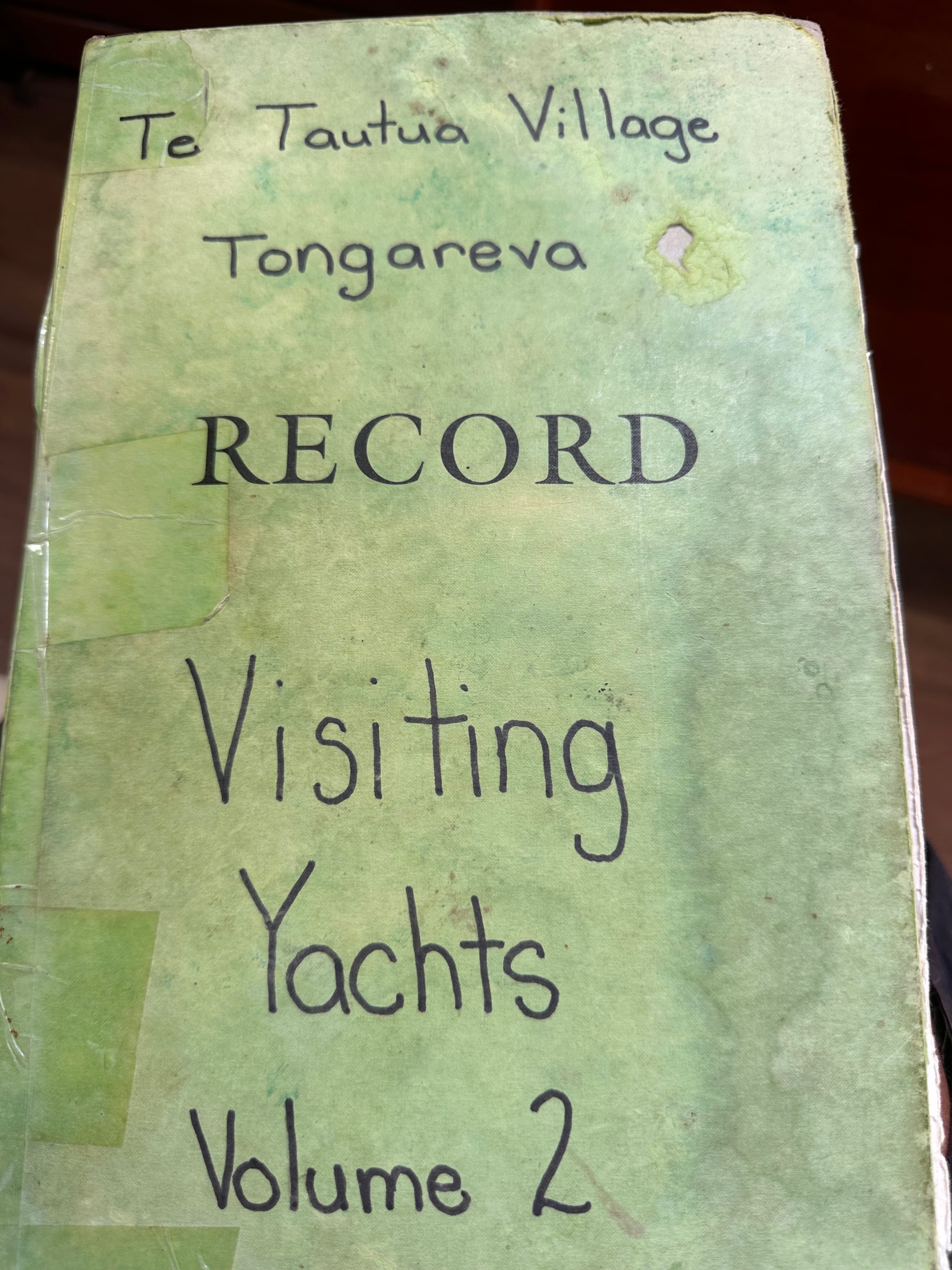
Kura is kind of the matriarch of the island. One of her long ago relatives, either a grandfather or uncle or cousin (kinship labels are another factor that gets blurred), started the tradition of having visiting boats sign a “yacht register” that’s now on Volume 2. Sadly, volume 1 has been removed from the island, in the hands of the relative who started this whole thing. I hope it doesn’t get lost to history. The one we’ve already signed is a work of art, breathtaking snapshots of visitors and experiences, paintings and 3-D renderings including shells. Holding onto the book and flipping through it is a step through time.
Before we arrived, we watched a couple of YouTube videos done by other cruisers who had visited here. They mention a special kind of coconut pancake. When a boat stopped by the other day to see if we needed coconuts or fish, they pried open one of the coconuts to show us the interior and told us you use it to make these pancakes.
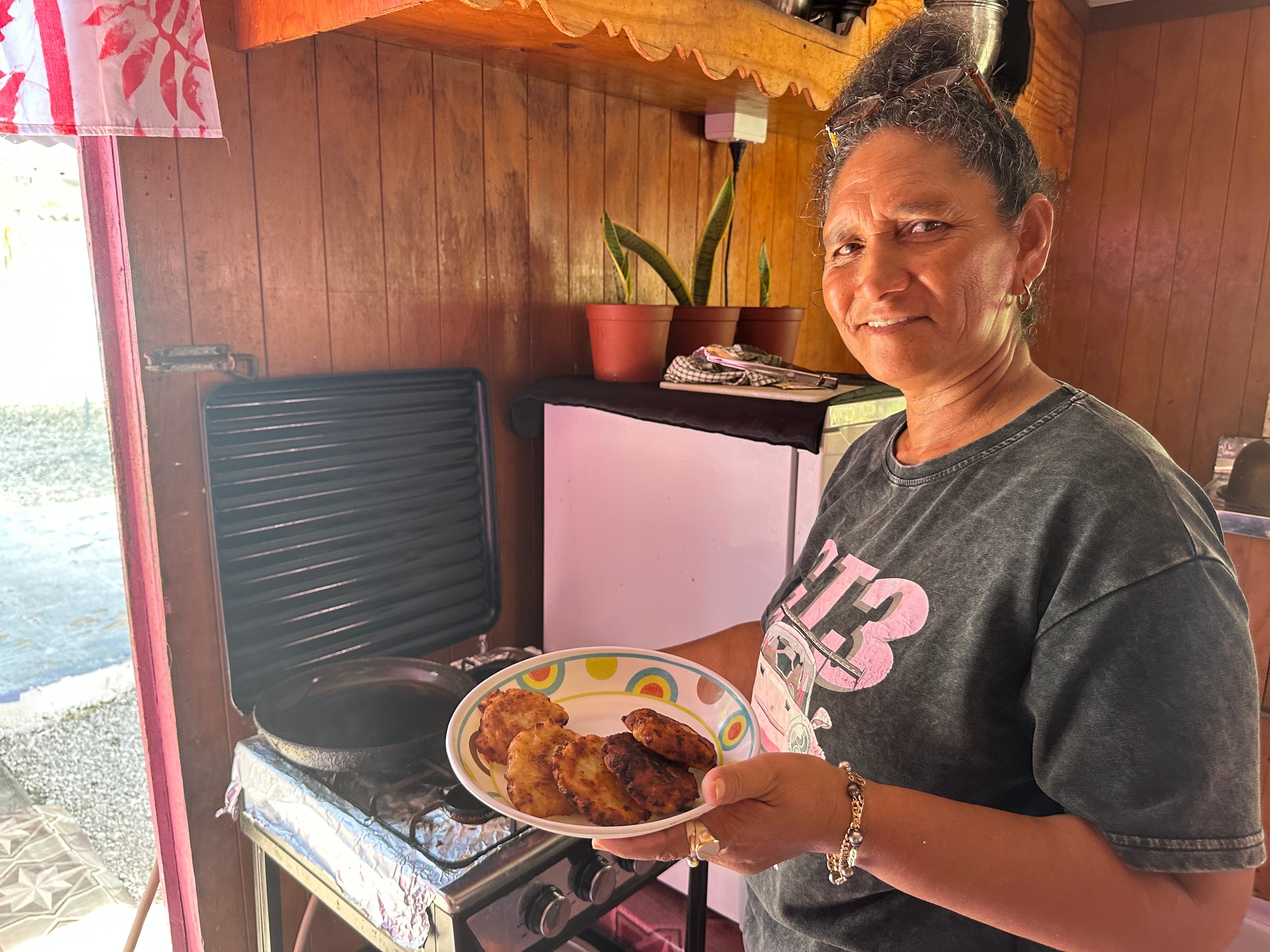
This morning I asked Kura to show me how to make them. I brought in the coconuts we’d been given and she set to work.
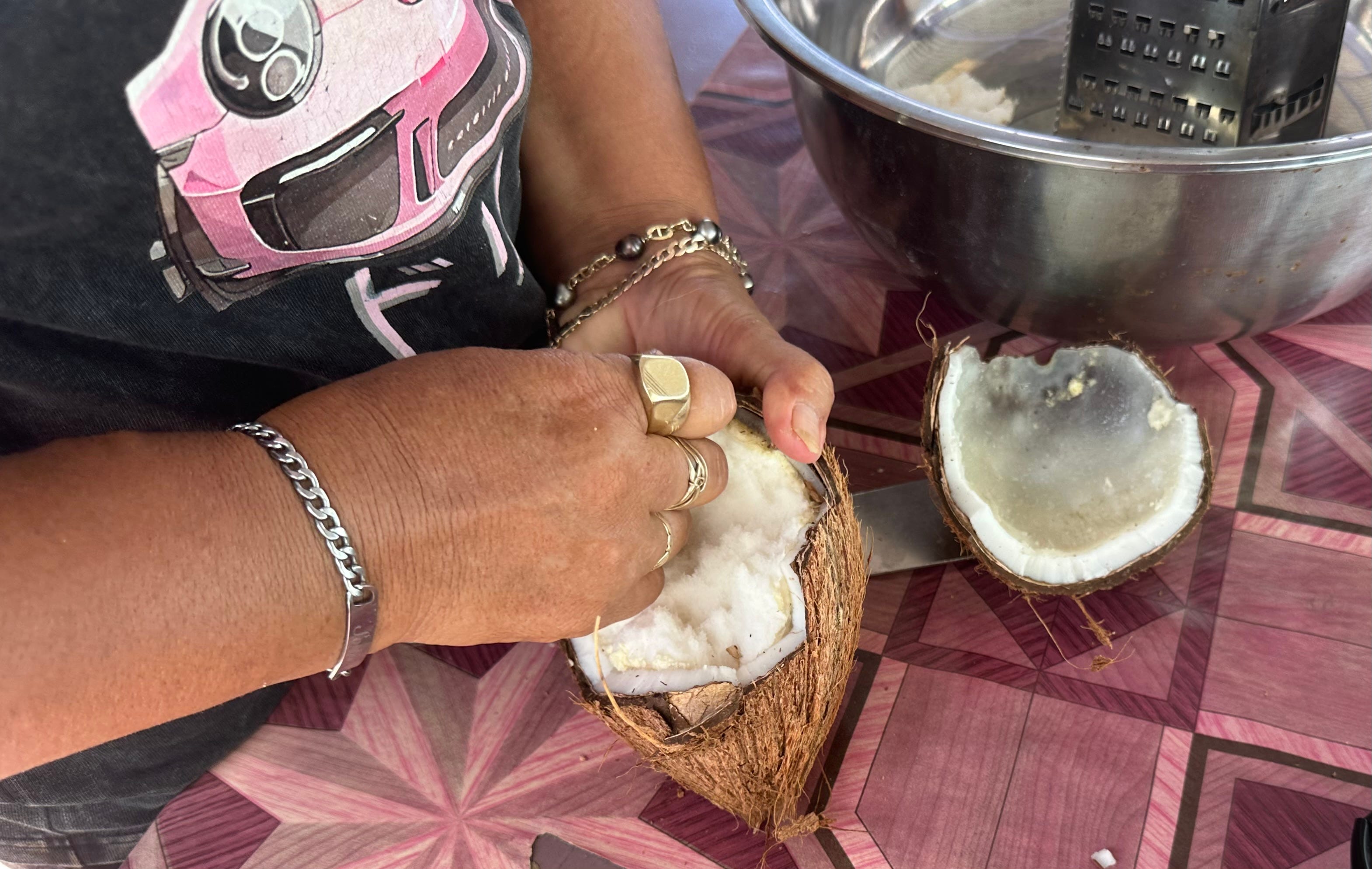
She calls this stage of coconut the marshmallow. When a coconut is just starting to sprout (as in, there is a green shoot coming out of the brown nut), the inside of the nut is a solid-ish mass of barely-coconut flavored sponge. I have not yet confirmed it, but my guess is the leaves from this sprout are what get turned into the fibers used to make hats, fans, and jewelry. Use all parts of the coconut. I’ll have to ask that question!
Take that out, grate it, mix it with flour and a smidge of sugar, add enough water to make a dough, and pat out discs that you deep fry. That’s it. Excellent fresh out of the grease, I can attest!
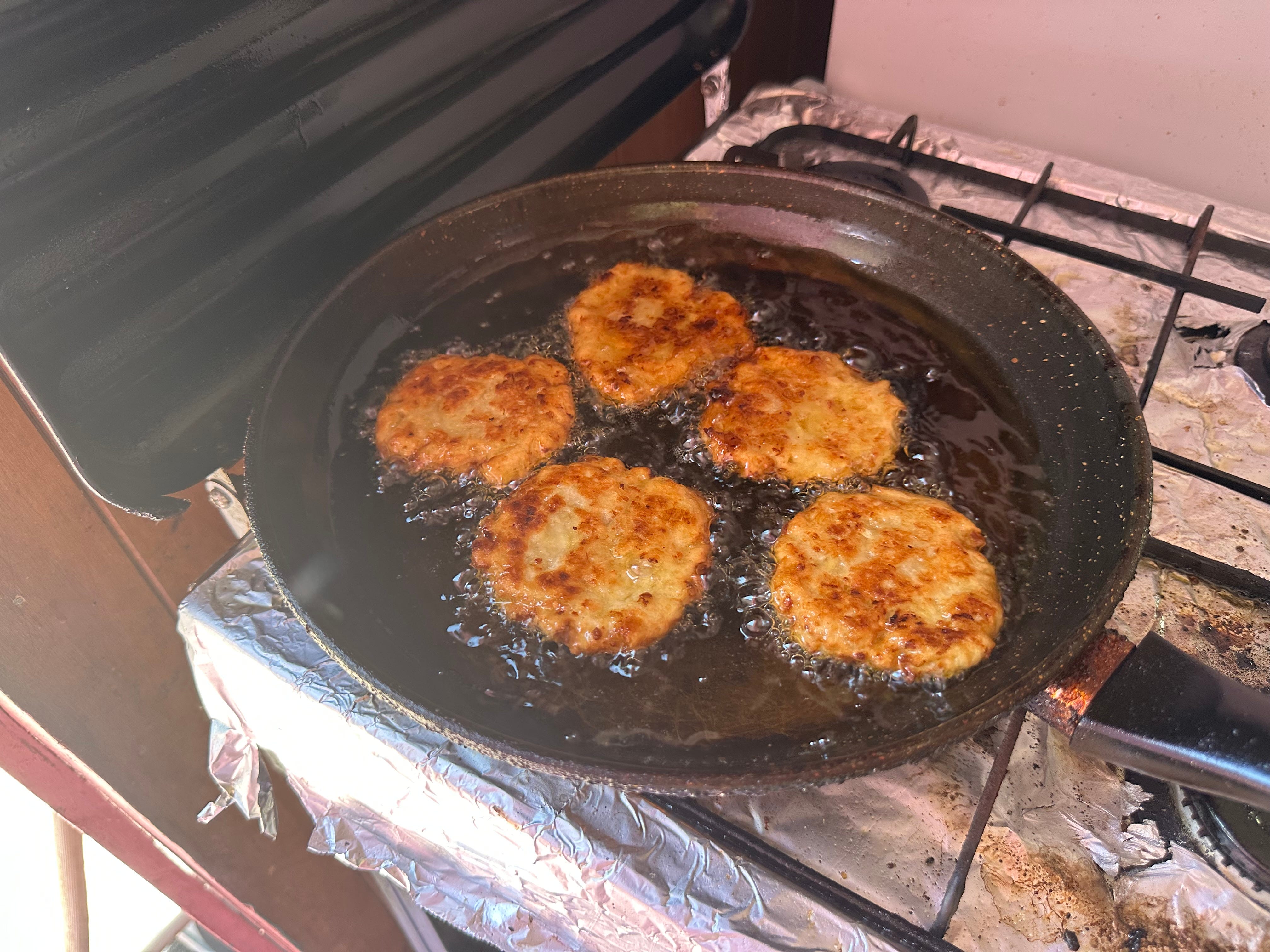
I think, though, that a good part of the joy of eating this today was in getting a lesson from Kura.
***
Coconut “Marshmallow” Pancakes
makes 5 small-ish pancakes
1 coconut, marshmallow stage
the same amount of flour as the amount of grated coconut
1 small spoonful of sugar
Once you’ve cleaned the coconut to brown hairy husk stage, crack it open* and pry out the center mass. Use the rest of the coconut, shell and all, for burning, or for chicken food.
Grate the spongy mass with a coarse grater, right into a bowl
Eyeball and add about as much flour as coconut
Add in a small spoon of sugar
Stir in just enough water to make a dough ball
Heat up a skillet with oil for shallow/deep frying
Pinch off decent size balls of the dough and flatten it into a fritter/pancake shape. (Wet hands help keep the dough not on your hands)
When the oil is hot, slide the pancakes in
Cook until the first side is deep brown, then flip it over and fry the second side the same way
Cool and eat. Yum. (Kura tells me I can keep extras in the fridge to eat later)
*easiest way to crack a coconut is to whack it a few times vertically with the back side of a machete, or a heavy spoon. It develops a deep fissure that lets you just pry the coconut apart.
Without your article I wouldn't have known what to do with the coconut marshmallow we found yesterday. So good! Thankyou Nica.