
Unexpected Ingredients
Tasty Thursday, edition 16

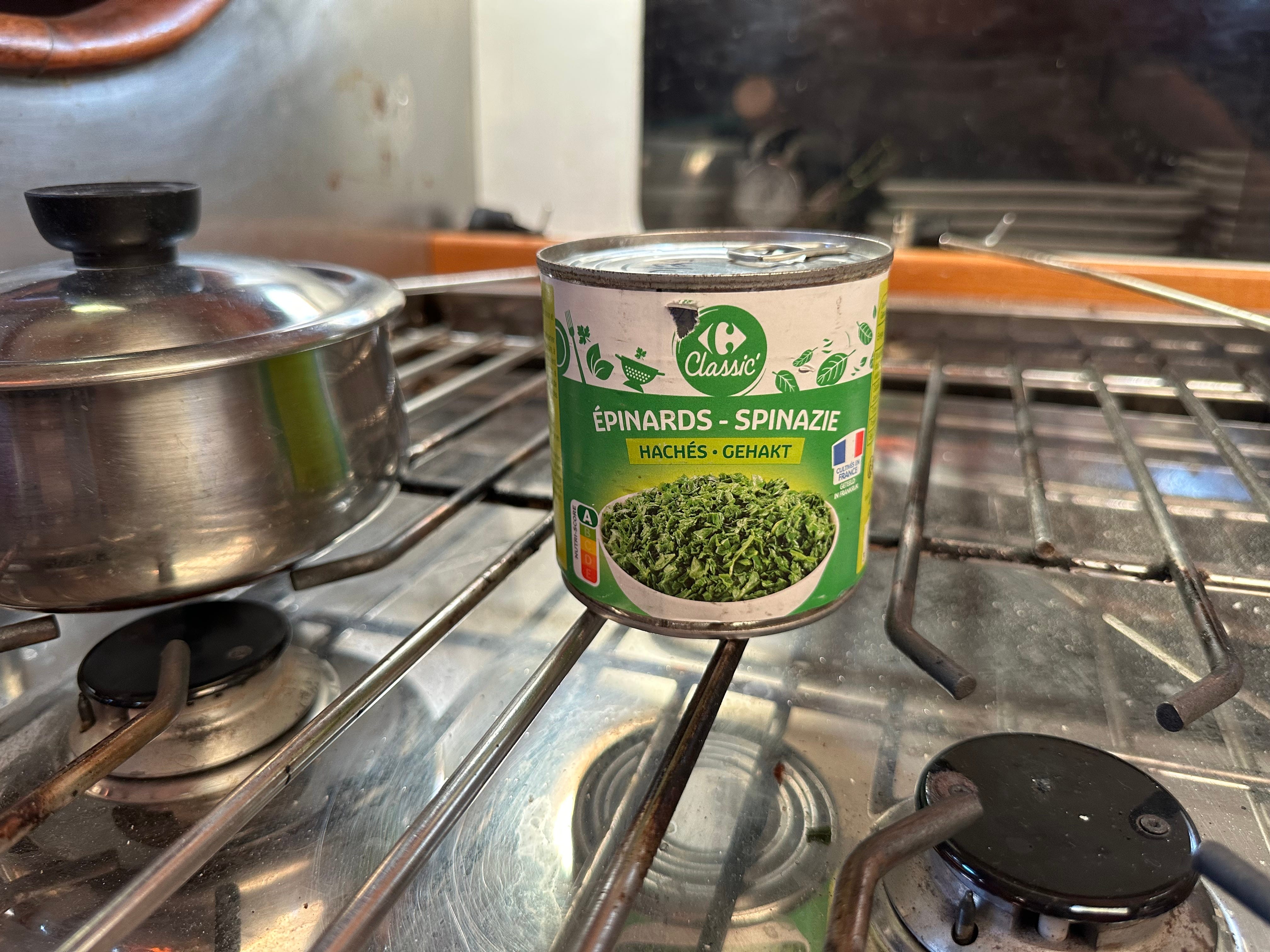
YOU SEE: What are you, Popeye? Is that canned SPINACH?? GROSS.
I SEE: Saag paneer!
***
Once upon a time, I stocked what felt like a cross-section of the grocery store’s canned food section in the lockers. Canned potatoes, canned asparagus. Peas, beans. After all, isn’t that what real cruising sailors without a freezer are supposed to live on? Canned food? Canned food and fish you catch yourself, or (as someone on a recent WhatsApp group just posted) coconuts and canned green beans?
Apologies to those for whom such things are delicacies, but I am not among you. I wound up throwing away a depressing amount of those originally stocked cans; we just do not eat that stuff. Calypso’s canned provisions are far simpler these days, focused on items we actually use on a regular basis. Tomatoes, mostly. In places where it’s available, canned pineapple. Corn. The beans that form the basis of a lot of our meals are dried, since they take up a lot less space and weight; using a pressure cooker means I can take beans from dried-in-the-bag to “ready for the recipe” in just an hour, including time to let the pressure release naturally.
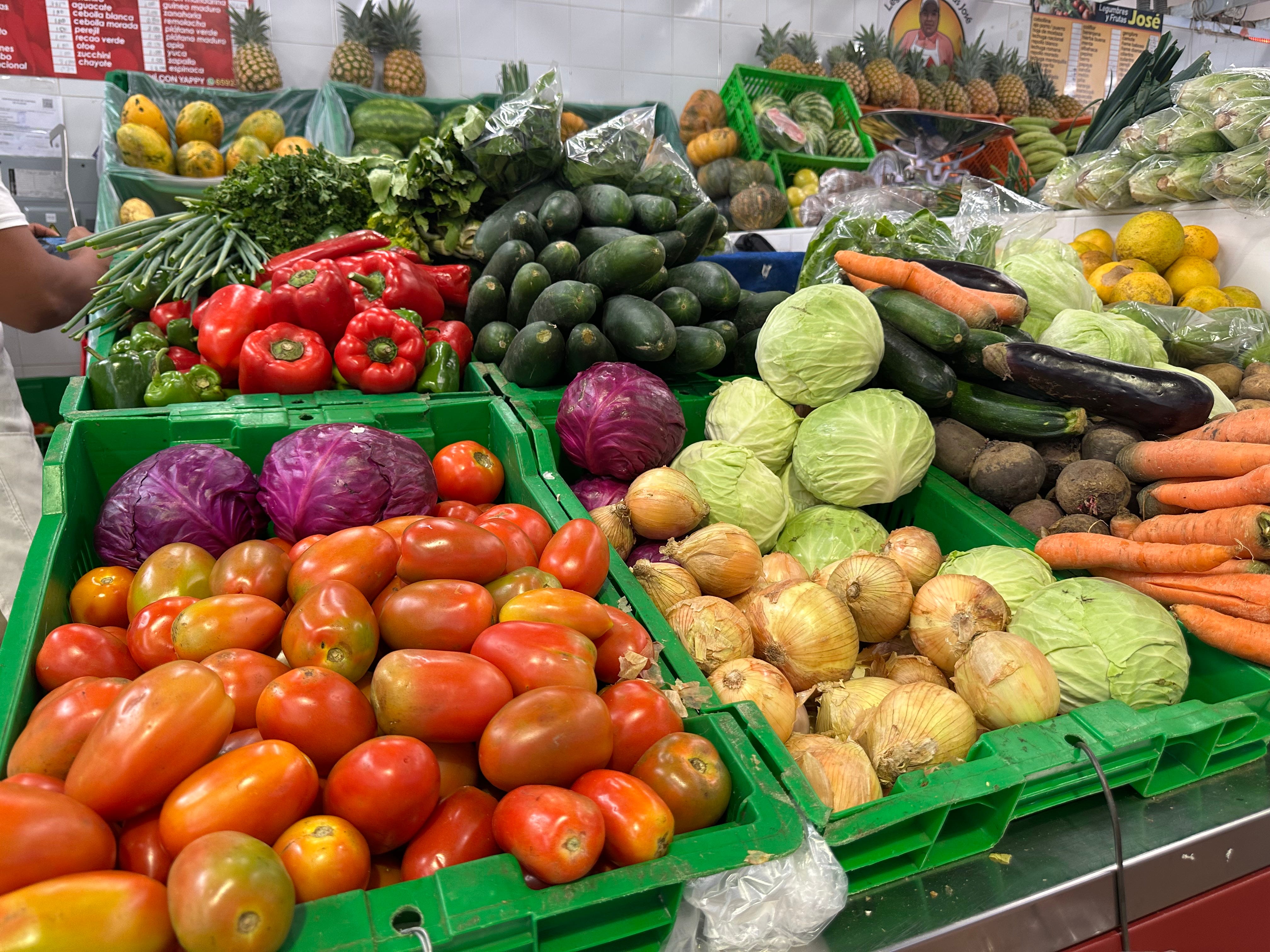
Sometimes though, it’s good to try new ingredients. And for us, canned spinach was a surprising discovery.
I’ve long said that if I had a freezer aboard, it would be stocked with mostly boneless cuts of meat and vegetables. (Okay, and a few boxes of Trader Joe’s pain au chocolat . . .) Spinach and peas specifically; after hanging out with our friends Ann and Greg on Halekai and being served the most delicious Indian food, heavy on the spinach, that spinach took a higher point on the wish list. After a few months in the Tuamotus and longing for that saag paneer (paneer is easily made from readily-available powdered milk), I sent Ann a text. Do you think canned spinach would work? Worth a try, came her response.
Not only does it work gorgeously in saag paneer, canned spinach is a revelation on the “how it looks” front. Given the fact that processing vegetables usually turns them into sad mushy versions of themselves, drowning in overly salty cloudy liquid, I was fully expecting to see spinach come out of the can as a brown sludge. The first can I bought, in fact, was a 2-lb version, since I reasoned that fully half would likely be plain liquid.
Hah! Imagine my surprise when I opened the can to find green greens, with less liquid to press out than if I’d thawed a box of chopped spinach. And while I am not sure I’d just serve heated canned spinach as a side vegetable, I would not think twice before using it in lasagna, or, as in the recipe that started this whole discovery, saag paneer.
Canned spinach, like its frozen counterpart, is available in whole leaf and chopped varieties. I have not tried the whole leaf one and don’t plan to. Open the can, drain it (there’s not a lot of liquid to drain!), and rinse it to remove any lingering “canned” flavor. I can’t say I notice any difference at all in flavor from canned or frozen spinach, and with saag paneer one of our favorite meals, canned spinach has definitely earned a spot in those food lockers aboard.
***
SAAG PANEER (or really, the saag part - if I’m not motivated to make paneer, I have been known to throw a can-equivalent or two of chick peas into the sauce)
Makes enough for 4-6
1 onion (or half, depending on how big it is), chopped fine
2-3 cloves garlic, minced
Good inch of finely chopped fresh ginger
1-2 tsp cumin
1-2 tsp coriander (not the leafy herb, the dusty kind of dried spice)
1-2 tsp garam masala
1/2 tsp+ turmeric
1/2 tsp cayenne (optional)
1 1 lb can (not bigger!) chopped spinach - or 1-2 boxes thawed frozen -, rinsed and drained
2 14 oz cans diced tomatoes (I use 1 can cherry tomatoes and 1 can diced, if I have them) - no need to drain these!
INSTRUCTIONS
In a deep saucepan, sauté onion, garlic, ginger in 1 TBS vegetable oil until it starts to be translucent and smell pretty good.
Add in the spices and stir to combine with the vegetables
Almost immediately stir in the tomatoes and the spinach
Cook for at least 10 minutes, until the flavors have begun to meld (this is great made ahead)
OPTIONAL: buzz with an immersion blender until smooth. This will have the unfortunate result of turning it to more brown than bright green - it’s fine to leave it unblended, where the colors are a little more appetizing.
Stir in a can or two of chickpeas, or a good amount of cubed paneer (or a block of tofu or even firm mozzarella cheese) Adjust salt and heat as necessary.
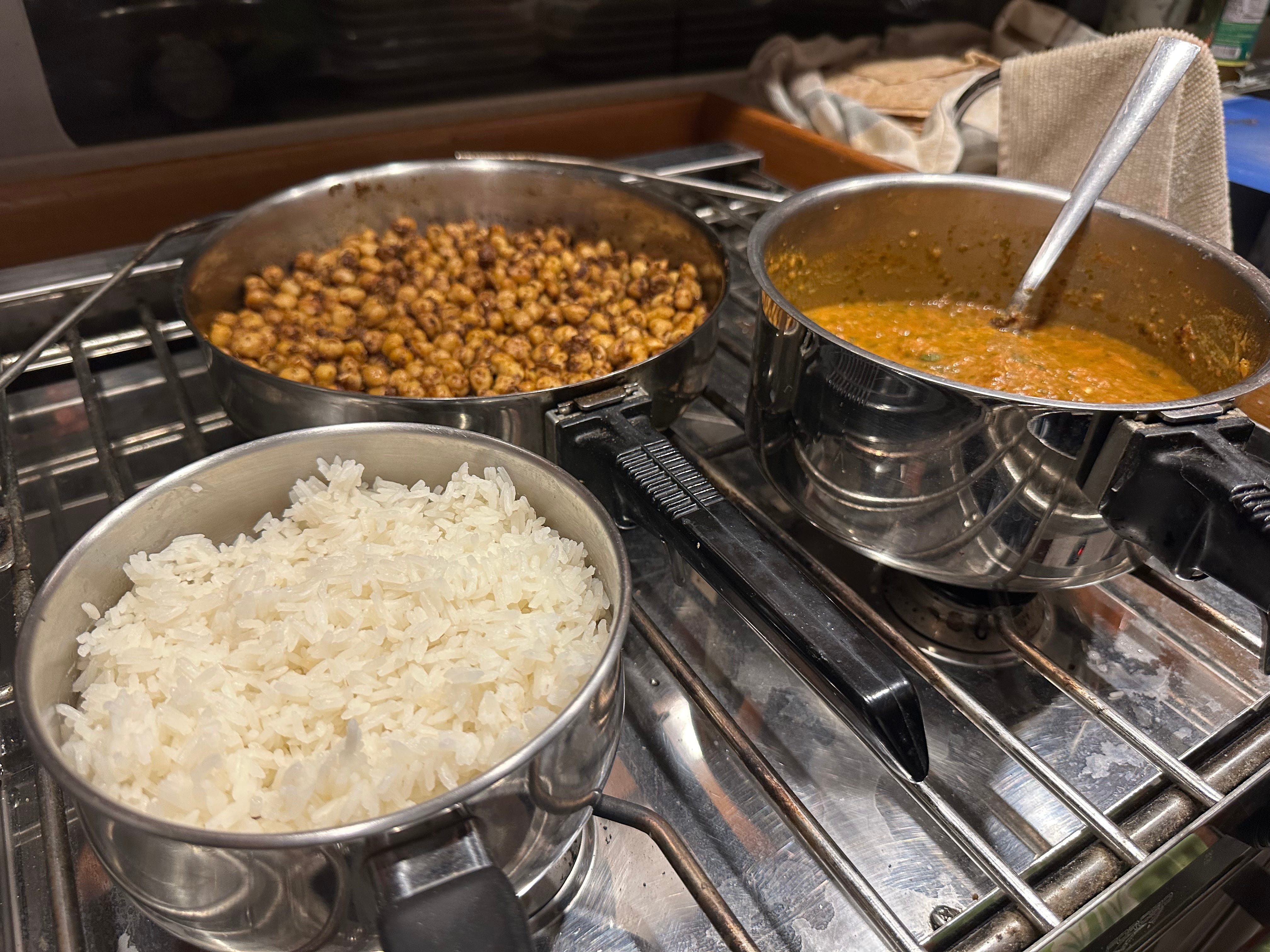
I serve this over rice with fresh naan on the side; a crisp simple green salad goes well but maybe that’s a pipe dream. If I’m not using chick peas in the sauce, I might serve some sautéed chick peas on the side.
***
We’re in Huahine, French Polynesia, lockers stocked with everything necessary for a few months off-grid. It’s going to be fun to see what kind of new ingredients we’ll learn about in Tonga!


I knew palak paneer but not saag paneer. And I think if anyone frowns upon canned food, well, they should know that it is easy to speak from a privileged place where all your food is flown into your lap. I continue to be impressed by your creative approach to cooking on a small sail boat. Super impressive every time and those views you share at the end of the post are always amazing.
Great post, Nica! If you are in Huahine, the best cheeseburger in the South Pacific is at Izzy's. Give her our regards!